If you’ve searched “new roofing materials 2026,” you’ve probably noticed something: most of the “new” stuff isn’t actually brand new. It’s better versions of roofing systems that have been around for years, refined with smarter engineering, tougher materials, and features that pay you back over time.
That’s good news if you’re planning a roof replacement. It means the products on the market today are more tested, more reliable, and easier to compare than the experimental options of a decade ago. Here’s what’s worth knowing about four categories leading the conversation this year: solar shingles, cool roofs, synthetic slate, and impact-resistant shingles.
Solar Shingles: Solar Power Without the Bulky Panels
Solar shingles (also called solar roofing or photovoltaic shingles) generate electricity the same way traditional solar panels do, but they’re built into the roofing material itself instead of mounted on top of it. For homeowners who want solar power without the bolted-on look of rack-mounted panels, that’s a big selling point.
CertainTeed’s Solstice Shingle is one of the more established options. It’s designed to lie flush with surrounding asphalt shingles, so the roofline stays clean instead of looking like it has hardware attached. It carries a wind rating of 110 mph, meets impact-resistance testing, and comes with a 25-year warranty. It also won Best in Show at the National Association of Home Builders’ 2024 International Builders’ Show, which says a lot about how far the category has come.
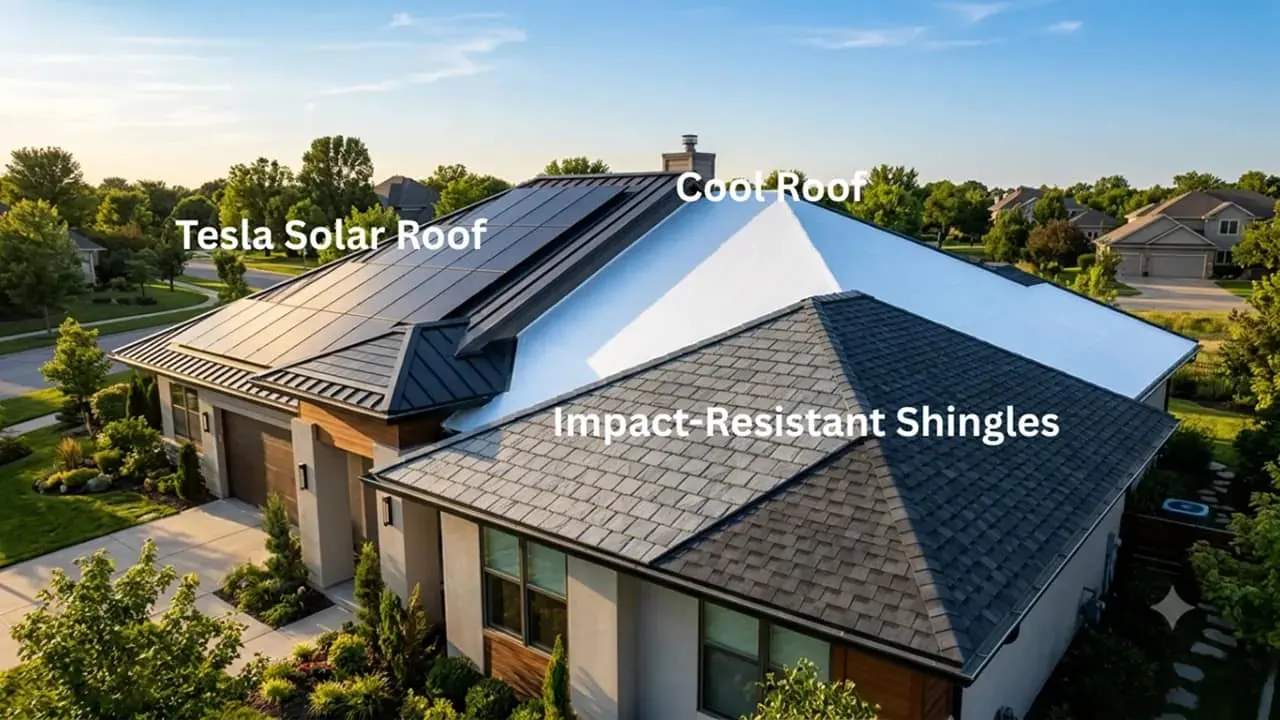
Then there’s the Tesla Solar Roof, the product that put solar shingles on the map. It’s beautiful, but it’s also expensive: full installs run around $100,000 on average, and solar panels remain roughly 60% cheaper for the same power output. The math tends to work best if you already need a roof replacement, since you’re not paying full price twice, once for the roof and once for solar. If your current roof still has years left, standard panels usually make more financial sense.
Bottom line: solar shingles are a strong option if you’re replacing your roof anyway and want the clean look. If your roof is in good shape, traditional panels will save you money.
Cool Roofs: Lower Temperatures, Lower Bills
A cool roof reflects more sunlight than a standard roof instead of absorbing it, the same idea behind wearing a white t-shirt on a hot day instead of a black one. According to the U.S. Department of Energy, a conventional roof can hit 150°F or higher on a sunny afternoon, while a reflective roof can stay more than 50°F cooler under the same conditions.
That temperature difference matters more than it might seem. A cooler roof means your air conditioner works less, which can lower energy bills and take pressure off older HVAC systems during peak summer heat. It can also extend the life of your roofing materials, since less heat stress means less wear over time.
Cool roofing isn’t a single product. It’s an option available across nearly every roof type, from asphalt shingles to metal to tile, thanks to reflective pigments and coatings. One trade-off worth knowing: in colder climates, a cool roof can slightly increase winter heating costs, since it reflects away some of the sunlight that would otherwise help warm the house. For homeowners in hot, sun-heavy regions, though, the savings usually outweigh that trade-off.
Synthetic Slate: The Look of Slate Without the Weight or Price
Real slate roofing is beautiful, but it’s heavy, expensive, and often requires extra structural support. Synthetic slate solves all three problems. Made from engineered polymers, it’s built to mimic the texture and dimension of natural slate while weighing about 70% less, which means most homes can handle it without any structural upgrades.
It’s also a lot easier on the budget. Synthetic slate typically costs 40-50% less than the real thing, while still carrying a Class 4 impact rating (the highest available) and wind resistance up to 188 mph or more in some products. Installation crews can usually complete a synthetic slate roof in about half the time it takes to install real slate, which means less scaffolding in your yard and a shorter project timeline overall.
Because of its durability, synthetic slate can also come with insurance perks. Some insurers offer discounts for Class 4 impact-rated roofs, and the upgrade can add real resale value, since slate-look roofing reads as a premium feature to future buyers.
Impact-Resistant Shingles: Built for Hail and Severe Weather
If you live somewhere that sees regular hailstorms or severe wind, impact-resistant shingles are worth a serious look. These shingles use polymer-modified asphalt to stay flexible under impact instead of cracking, and two products stand out in 2026.
Owens Corning’s TruDefinition Duration FLEX shingles combine SBS polymer-modified asphalt with the brand’s SureNail Technology, giving them Class 4 impact resistance and wind resistance up to 130 mph. The added flexibility helps them handle both storm debris and the freeze-thaw cycles that stress a roof over the winter.
CertainTeed’s Landmark ClimateFlex takes a similar approach, pairing the dimensional look of wood shake with polymer-modified asphalt for Class 4 impact resistance. It’s rated for 110 mph winds standard, with an upgrade option to 160 mph, and it stays pliable in cold weather, which makes it easier for crews to install correctly during winter months without the shingles cracking. CertainTeed also uses recycled shingle material in production through its RenuCore program, so it’s a solid pick if sustainability matters to you too.
Beyond storm protection, Class 4 shingles frequently qualify for homeowner insurance discounts, which can help offset the higher upfront cost over time.
Choosing the Right Material for Your Home
With four solid categories to choose from, the right pick usually comes down to three questions:
- Do you already need a new roof? If so, solar shingles and premium materials make more financial sense, since you’re not paying for a separate project later.
- What does your climate throw at you? Hot, sunny regions benefit most from cool roofing. Hail-prone areas should prioritize impact resistance.
- What’s your budget and timeline? Synthetic slate and impact-resistant shingles tend to offer the best balance of cost, durability, and installation speed.
Find the Right Material for Your Home
Every roof is different, and the best material for your neighbor’s house might not be the best fit for yours. Before you decide, it helps to see the real numbers side by side. Instant Roofer’s online roofing calculator lets you estimate costs by roof size and material, so you can compare solar shingles, cool roofs, synthetic slate, and impact-resistant shingles against your actual budget.
From there, Instant Roofer can connect you with vetted local contractors to get quotes on the material you choose.