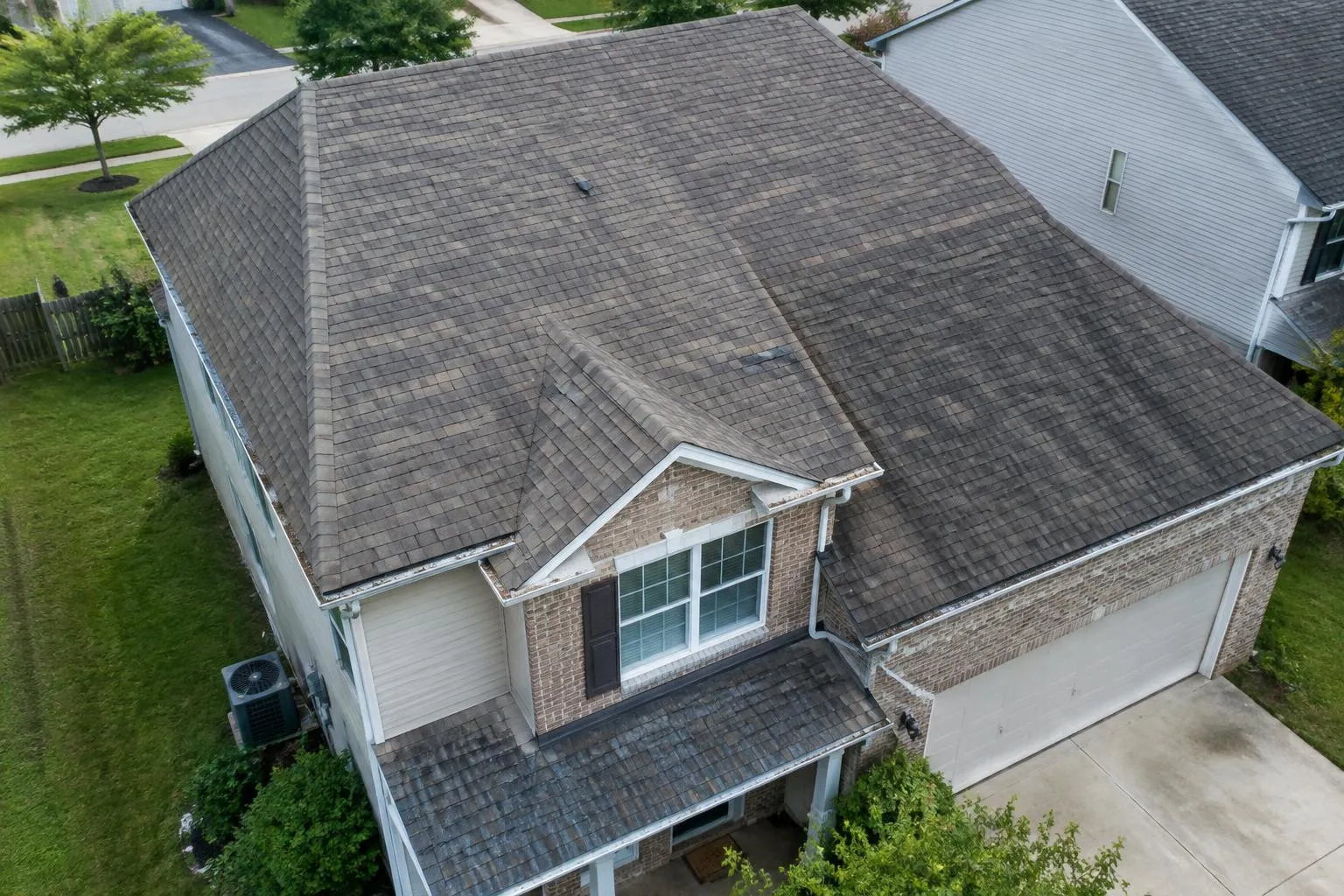
A roof that’s 20 years old isn’t necessarily ready for replacement. But if you’re finding granules in the gutters, noticing curled shingles, or spotting a few bare patches, you might be wondering how much longer it can protect your home.
So, how long does an asphalt shingle roof last? Most last about 20 to 25 years, although some wear out sooner and others hold up longer. The type of shingles, installation quality, local weather, and attic ventilation all play a part.
Let’s look at what you can expect from your roof, why some asphalt shingles age faster than others, and how to tell when repairs are no longer enough.
How Long Can You Expect Your Shingles to Last?
Not all asphalt shingles are built the same way. A basic 3-tab roof and a thicker architectural shingle roof won’t necessarily give you the same number of years.
Here’s a general look at what homeowners can expect:
| Shingle type | Typical estimated lifespan | What it means for your home |
|---|---|---|
| 3-tab asphalt shingles | 15 to 20 years | A more affordable option, but thinner and generally less durable than architectural shingles. |
| Architectural asphalt shingles | 20 to 30 years | Thicker, more dimensional shingles that are a popular choice for roof replacements. |
| Premium asphalt shingles | 30+ years, depending on the product | Higher-end products designed for enhanced performance and potentially longer service life. |
These are estimates, not expiration dates. A 25-year-old architectural roof might still be in reasonable condition, while a poorly installed 15-year-old roof could already have problems.
If your 3-tab roof is approaching 15 to 20 years old, it’s a good time to schedule an inspection and start planning for a possible replacement. Have architectural shingles? You may have more time, but an inspection around the 20- to 25-year mark is still a smart move.
Why Some Asphalt Roofs Wear Out Faster Than Others
Have you ever noticed that two houses in the same neighborhood can have completely different roofing conditions, even when their roofs were installed around the same time?
The difference often comes down to what happens after installation. Your shingles deal with years of sunlight, temperature changes, storms, and moisture. A few other factors can make that aging process happen even faster.
Installation Quality Makes a Difference
A roof is more than the shingles you see from the street. Underneath them, there’s a system of underlayment, flashing, fasteners, vents, and roof decking that all work together to keep water out.
When something goes wrong during installation, the problems may not show up immediately. Improperly placed nails can leave shingles vulnerable to wind damage. Poorly installed flashing around chimneys, vents, or valleys can create openings where water gets in. Even incorrect underlayment installation can leave parts of the roof less protected than they should be.
That’s why choosing an experienced roofing contractor matters. Quality shingles can’t compensate for a roofing system that wasn’t installed correctly.
Attic Ventilation Affects Roof Health
Your attic plays a bigger role in roof longevity than you might think.
Without adequate ventilation, heat and moisture can build up beneath the roof deck. Excessive attic heat can accelerate the aging of asphalt shingles, while trapped moisture can contribute to condensation, wood rot, and damage to the roof structure.
What might you notice? An unusually hot attic during summer, damp insulation, condensation on surfaces, or signs of moisture around the roof decking can all point to ventilation or moisture problems.
Proper attic ventilation helps regulate temperatures and remove excess moisture. It’s one of the things worth checking if your shingles seem to be aging faster than expected.
Sun, Storms, and Weather Take Their Toll
Your roof spends every day exposed to the elements. Over time, that exposure adds up.
UV radiation can deteriorate the asphalt in shingles, while wind can lift or remove them. Hail may bruise shingles or damage their protective granules. Heavy rain and temperature changes can also put stress on an aging roofing system.
Homes in hot, sunny climates may experience faster shingle aging than homes in milder areas. That’s one reason two roofs with the same installation date can have very different lifespans.
After a major storm, look for visible signs of damage from the ground, such as missing shingles, dented vents, or debris. If you suspect roof damage, arrange a professional inspection rather than climbing onto the roof yourself. Some problems aren’t easy to spot without getting a closer look.
Small Repairs Can Prevent Bigger Problems
A missing shingle might not look like a major issue, but it can leave the underlying roofing materials exposed to water.
The same goes for damaged flashing, loose shingles, or clogged gutters. When water can’t drain properly or finds an opening around a roof penetration, it can eventually reach the roof deck and cause more extensive damage.
Cleaning your gutters, addressing damaged shingles promptly, and fixing flashing problems can help prevent unnecessary deterioration. Periodic professional inspections are also worthwhile, particularly as your roof gets older. The National Roofing Contractors Association recommends inspecting residential roof systems at least twice a year, preferably in spring and fall, and after severe weather.
Warning Signs Your Asphalt Shingles Are Wearing Out
You don’t have to wait for a leak to know your roof needs attention. In many cases, shingles show visible signs of aging before water makes its way into your home.
Here are some things to watch for:
- Curling or buckling shingles: Shingles that curl at the edges or appear uneven may be showing signs of deterioration.
- Cracked shingles: Cracks can develop as shingles age and become more vulnerable to wind and water.
- Missing shingles: Wind or storms can remove shingles, leaving parts of your roof exposed.
- Bare spots or heavy granule loss: Areas where the asphalt is exposed may indicate significant wear.
- Granules collecting in gutters: Large or persistent amounts can point to excessive shingle deterioration.
- Water stains on ceilings or walls: These may indicate a roof leak or another source of water intrusion.
- Sagging roof areas: A sagging section can indicate problems with the roof structure or underlying materials.
- Repeated leaks: If you keep dealing with leaks in different areas, the roof may have more widespread problems.
One thing worth knowing about granules: finding a few in your gutters doesn’t automatically mean your shingles are failing. New shingles can shed excess manufacturing granules during their first several months. However, large or persistent amounts, especially when you can also see bare spots or discoloration, deserve a closer look.
Water stains are another warning sign you shouldn’t ignore. They don’t automatically mean you need a new roof, but they do mean water is getting somewhere it shouldn’t. Finding the source sooner can help prevent damage to insulation, drywall, and wood framing.
Should You Repair Your Roof or Replace It?
Not every roofing problem calls for a full replacement. If a storm blows off a few shingles and the rest of your roof is in good condition, a repair may be all you need.
But what happens when problems keep showing up?
A repair may make sense when:
- Damage is limited to a small area.
- The surrounding shingles are still in good condition.
- Your roof is relatively young.
- The underlying roof deck and other materials are sound.
Replacement may be the better choice when:
- Your roof is near or past its expected lifespan.
- Shingles are curling, cracking, or missing across large sections.
- You keep paying for repairs in different areas.
- Leaks or water damage continue to appear.
- The roof deck or underlying materials show signs of widespread deterioration.
For example, replacing a handful of missing shingles on a 10-year-old roof is very different from repeatedly patching leaks on a 25-year-old roof with widespread granule loss.
If your roof is more than 15 years old and you’re seeing several warning signs, a professional inspection can help you understand whether another repair will buy you meaningful time or simply delay a larger problem.
What Does a “Lifetime” Shingle Warranty Actually Cover?
Many asphalt shingles come with a limited lifetime warranty. That sounds reassuring, but does it mean your roof is protected for as long as you own your home?
Not necessarily.
Manufacturers define lifetime coverage differently. Depending on the warranty, it may refer to the period during which the original homeowner owns the property, subject to specific transfer provisions. Basic warranties generally cover certain manufacturing defects, while enhanced warranties may include additional protection for installation errors or other specified problems.
Coverage can also change over time. Some warranties offer a period of stronger, non-prorated coverage before switching to prorated terms. That means the amount a manufacturer pays toward a covered claim may decrease as the shingles get older.
Storm damage, improper maintenance, and other conditions may fall outside standard warranty coverage. The details depend on the manufacturer and the specific product.
Before choosing shingles, ask your roofing contractor:
- What exactly does the warranty cover?
- How long does full coverage last?
- Is the warranty transferable if I sell my home?
- What maintenance is required to keep the coverage valid?
- Are labor, tear-off, and disposal included?
Don’t rely on the word “lifetime” alone. Read the actual warranty documents so you know what protection you’re getting.
Frequently Asked Questions
How long does an asphalt shingle roof last?
Most asphalt shingle roofs last about 20 to 25 years. Basic 3-tab shingles often last 15 to 20 years, while architectural shingles commonly last 20 to 30 years. Proper installation, ventilation, maintenance, and local weather all affect how long your roof holds up.
How do I know if my asphalt roof needs to be replaced?
Look for curling or missing shingles, heavy granule loss, repeated leaks, water stains inside your home, or widespread deterioration. If your roof is more than 15 years old and showing several of these signs, schedule a professional inspection.
Can I make my asphalt shingle roof last longer?
Yes. Keep gutters clear, trim overhanging branches, repair damaged shingles promptly, and make sure your attic has adequate ventilation. Periodic professional inspections can also help identify problems before they turn into costly repairs. Avoid unnecessary foot traffic on the roof, which can damage shingles.
Is a 20-year-old asphalt roof too old?
Not necessarily. A 20-year-old architectural shingle roof may still have several useful years left if it’s in good condition. However, it’s old enough that regular inspections and prompt repairs become more important.
Find Out What Your Roof Replacement Might Cost
Once you know your roof is approaching the end of its expected lifespan, the next question is usually how much a replacement might cost. You don’t have to wait for a contractor appointment to start researching your options.
Instant Roofer’s online roofing calculator can give you a preliminary estimate based on your address and roofing preferences. It’s a useful starting point for understanding potential replacement costs and planning your roofing budget.
Whether your roof needs a few repairs or a complete replacement, knowing its condition and what to expect financially puts you in a better position to make the right decision.