
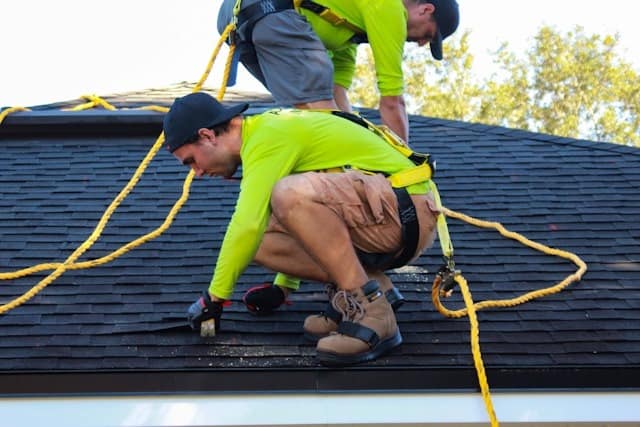
Photo by Raze Solar on Unsplash
Do you worry about the integrity of your roof? If you look up and see missing shingles, shingles with curling edges, and piles of grit in your rain gutters, the thought going through your mind isn’t about how your house looks. It’s more like, "What will this cost me?” Roof replacement is one of the largest investments a homeowner makes, other than buying the house.
When speaking with contractors, the terms can get confusing. Like the reference to squares. In roofing, "squares" refers to roofing squares, which is a section of roofing in a 10-foot by 10-foot area. This is equal to 100 square feet.
Understanding this unit of measurement is the secret to reading roofing estimates and making sure you pay a fair price for materials and labor.
The Realistic Price Range in 2026
Right now in the U.S., a professional roof replacement usually runs between $5 and $10 per square foot for standard asphalt shingles. If your home has 2,000 square feet of roof surface, it equals 20 squares. For a job that size, you are looking at a baseline of $10,000 to $20,000.
This price is usually split into three main buckets:
- Materials (40%): This is the cost of the shingles, the waterproof paper underneath, and the metal edges.
- Labor (45%): This pays for the skill of the crew, their safety gear, and the hard physical work of the install.
- Disposal and Overhead (15%): This covers the cost of hauling away your old roof and the basic costs of running a legal business.
Why Your Estimate Might Be Higher
No two houses are the same, so naturally estimates will vary from house to house. A simple, one-story ranch house is a straightforward job. A tall house with three stories and lots of steep peaks is a completely different project. It will require more tiles and more labor, and the job will take longer to complete.
The "pitch," or slope, of your roof is one deciding factor in the price. If your roof is steep or angled, crews need special harnesses and ropes just to stand up, so the labor costs will go up. Steep roofs take longer because the focus is on safety.
Another factor in pricing is the "tear-off." If your home already has two layers of shingles on it, the work to strip it down to the wood doubles. You are also paying double in landfill fees because the old roof is twice as heavy.
Finally, every chimney or skylight is a spot where a leak could start. These spots need custom metalwork to stay dry. A roof with ten of these spots will always cost more than a simple, flat roof because of the extra detail work required.
Logistics: More Than Just Nailing
A big part of your labor cost goes into the setup. For example, a supply truck can use a crane to put the heavy shingles right on your roof ridge. But if your driveway is too narrow or the house is too tall, the crew has to carry those 80-pound bundles up a ladder by hand. That takes extra time and muscle.
A professional crew also spends the first two hours of every job protecting your home. They cover your bushes with tarps, move your patio furniture, and protect your windows from falling debris. This setup and the final cleanup are essential steps for a quality job.
Choosing Your Materials
The type of shingle you pick is the biggest way to change the final price:
- 3-Tab Asphalt: These are flat and basic. They are the lowest cost option but only last about 15 to 20 years.
- Architectural Shingles: These are thicker and look much better. Most homeowners pick these because they last 30 years for just a little more money.
- Premium Materials: If you want metal, slate, or tile, your cost can jump to $12 or even $25 per square foot. These roofs last a lifetime, but the upfront cost is very high.
The Layers You Do Not See
When you see a price per square, check if it includes the small details that make a roof work. One of these is the "drip edge." This is a small metal strip that goes along the edges of your roof. Skipping this to save a few hundred dollars is a mistake. It is the only thing that stops water from soaking into your wooden trim boards and rotting them out.
You also have a choice in the "underlayment," which is the paper under the shingles. Old-school felt paper is cheap, but modern synthetic paper is much better. It does not tear, and it gives you a backup layer of protection if a shingle ever blows off in a storm.
Ventilation: Protecting the Life of Your Roof
A good roof needs air moving underneath it. If your attic does not have enough airflow, your roof will basically cook from the inside out.
In the summer, an attic with no air can hit 150 degrees. This heat bakes the glue on your shingles and makes them brittle. This can turn a 30-year roof into a 12-year roof very quickly. A pro contractor will make sure you have enough vents to keep the air moving.
How to Spot a "Lowball" Quote
The lowest price is not always the best deal. If a price is way lower than the others, something is usually missing.
Check for details. If a quote is just one big number on a piece of paper, that is a red flag. A professional quote should show you the cost of the tear-off, the brand of shingles, and the type of warranty you are getting.
Also, ask about insurance. A contractor who does not pay for insurance can offer a lower price, but if a worker gets hurt on your property, the bill could end up coming to you.
Quick Tips for Homeowners
- Waste Factor: Roofs are not perfect shapes. There is always some waste when shingles are cut to fit. A normal estimate adds about 10% to 15% for waste.
- The 10% Fund: Contractors cannot see through your old shingles. If they find rotted wood once the old roof is off, you will need to pay to replace it.
- Focus on the System: A great shingle on top of cheap paper is a waste of money.
- Do Not Wait for a Leak: Getting your roof done in the late winter or early spring can sometimes save you money compared to the busy fall season.
Moving Forward
Figuring out your roof cost starts with understanding the shape of your home. While the numbers can seem big, a new roof is the main thing protecting your house and everything inside it. According to the Remodeling 2026 Cost vs. Value Report, a standard roof replacement remains one of the highest-value home improvements you can make, often recouping a significant portion of its cost at resale
The next step is to get a professional measurement. Most good companies will give you a detailed breakdown that fits your specific house. When you have that paper in your hand, you are no longer guessing. You are making a smart choice to protect your home for the next few decades.
Ready to see where your project stands? Try Instant Roofers' free roofing calculator to get an immediate, AI-powered estimate for your specific address. It’s the fastest way to get a realistic price range for your home without a sales call.